ONE DOSE. A MONTH LATER.
THE MISSION GETS INTERESTING.
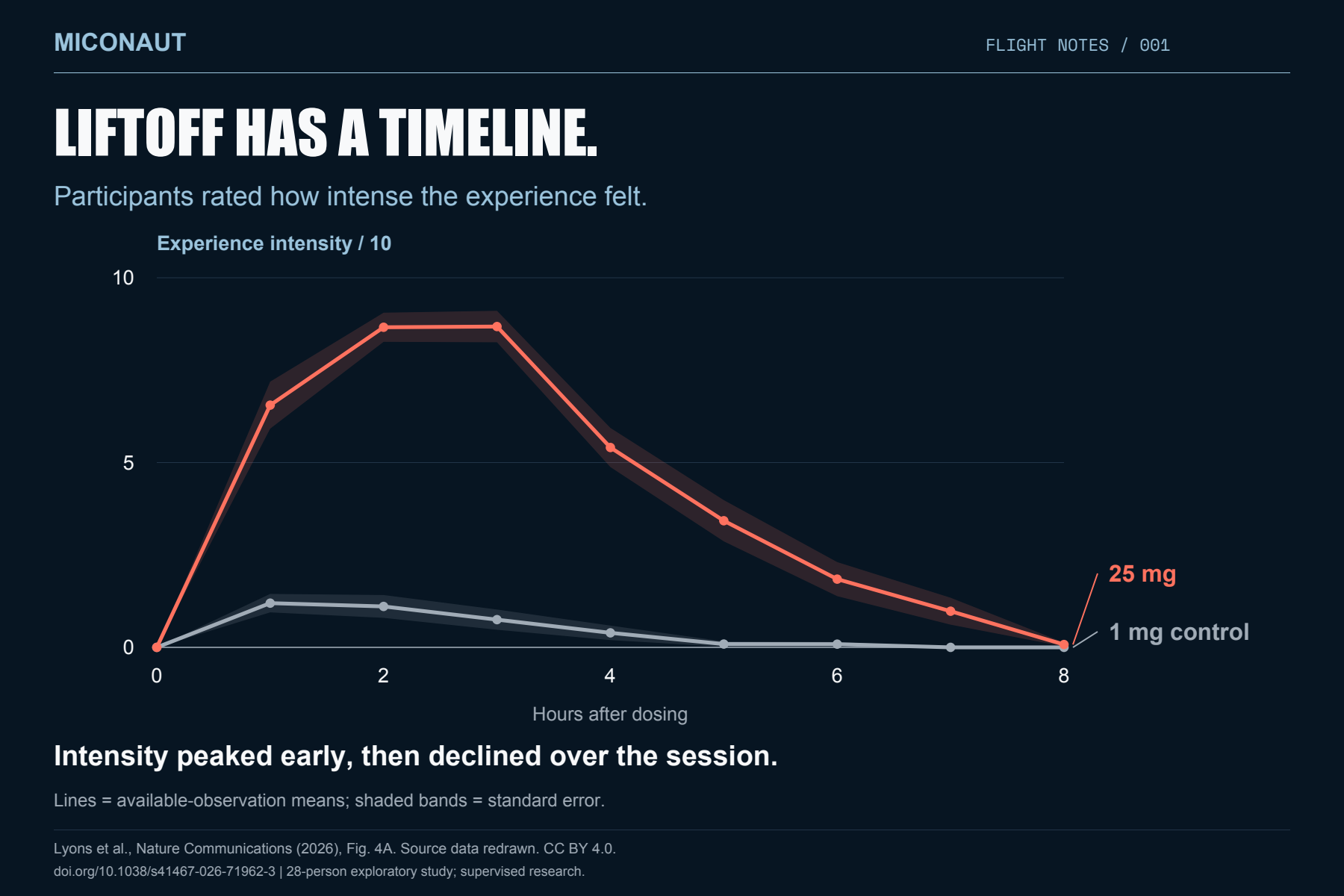
A 2026 study from Imperial College London and UCSF followed 28 healthy adults with no previous psychedelic experience. Participants received 1mg of psilocybin as a low-dose control, then 25mg a month later, under research supervision.
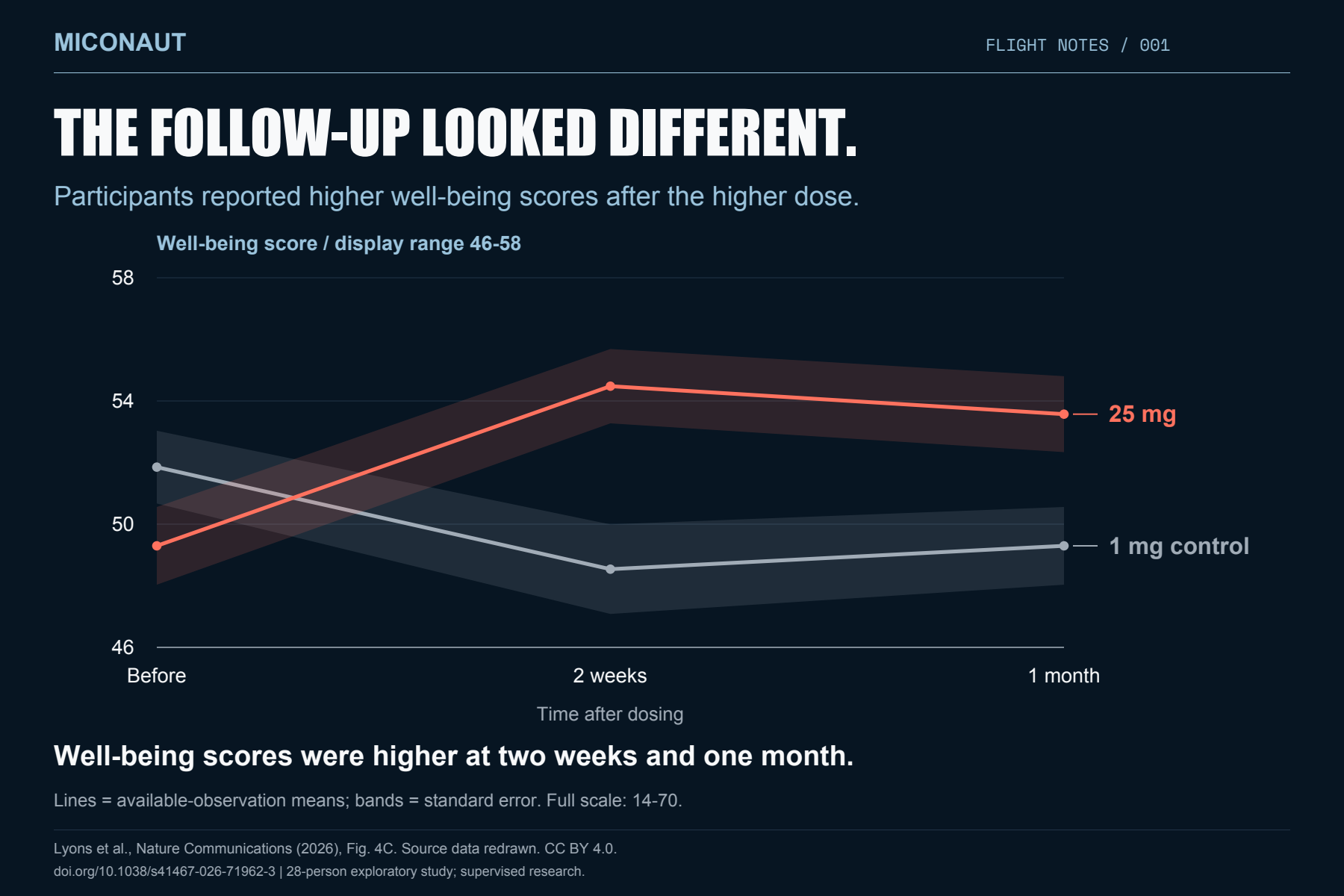
One month after the higher dose, researchers detected possible structural brain changes, alongside improved well-being and cognitive flexibility.
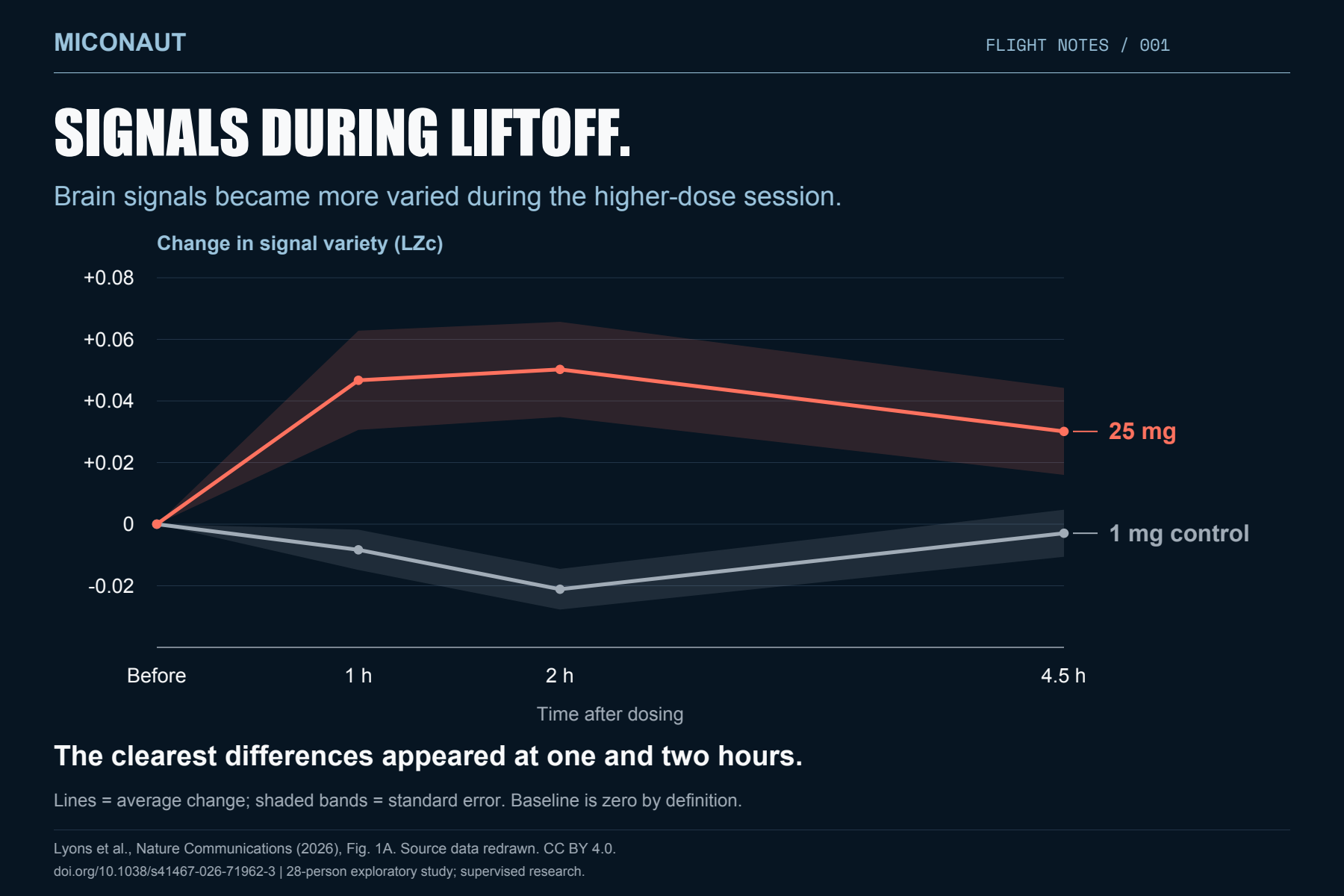
MORE POSSIBLE ROUTES THROUGH THE COCKPIT.
During the experience, electrical brain activity became more varied — a property called Brain Entropy. Greater increases predicted deeper psychological insight the next day, which in turn predicted better well-being a month later.
That’s an intriguing connection: the experience of understanding something about yourself may play a role in how psychedelic therapy works. The statistical relationship offers a promising explanation that needs further testing. UCSF’s research report.
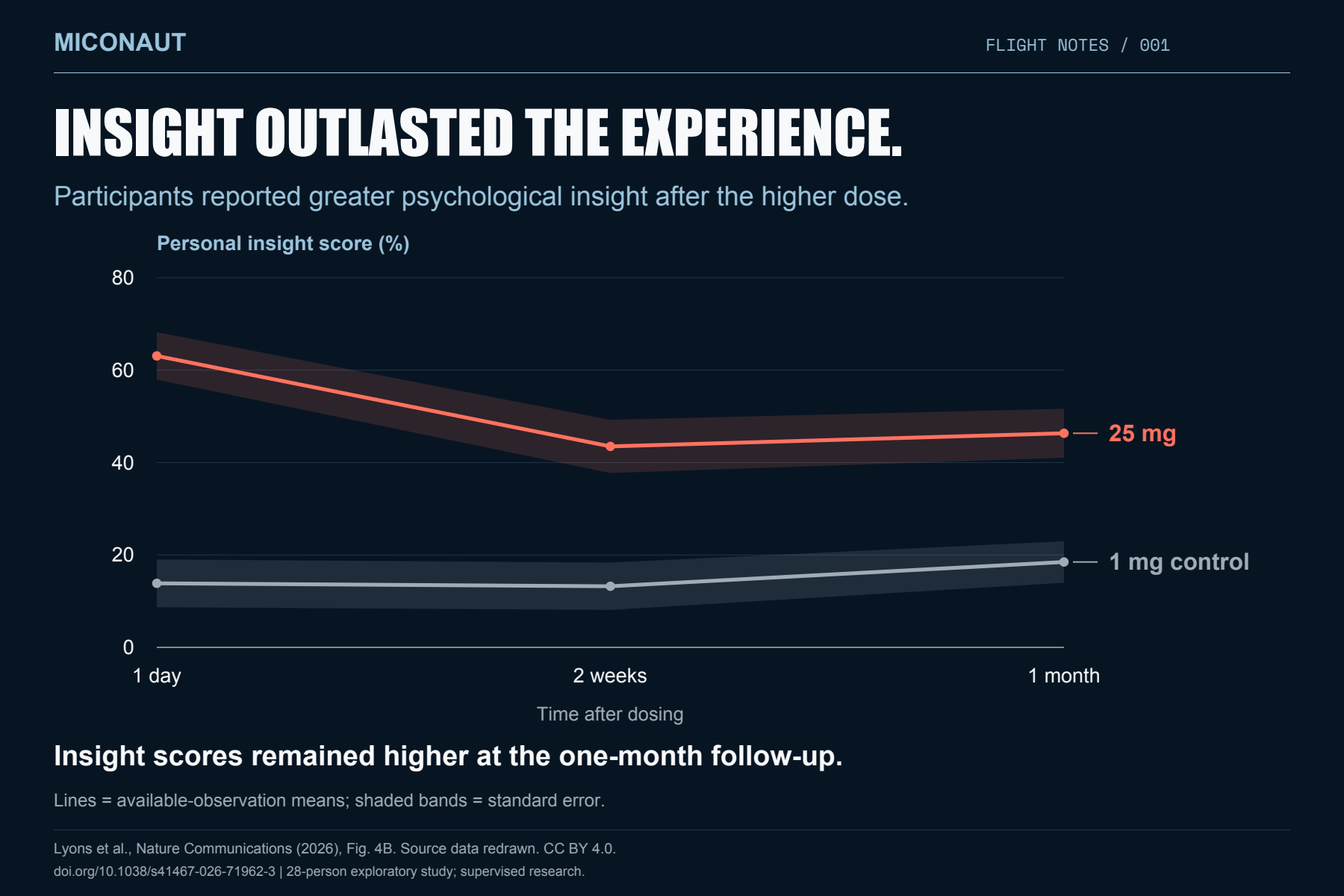
The researchers also checked what participants reported afterward.
They followed well-being scores for a month, too.
WHY THIS COULD MATTER.
Participants also became better at adapting when the rules changed in a cognitive test. Researchers suggest psilocybin may help loosen rigid thinking and make entrenched thought patterns easier to reconsider.
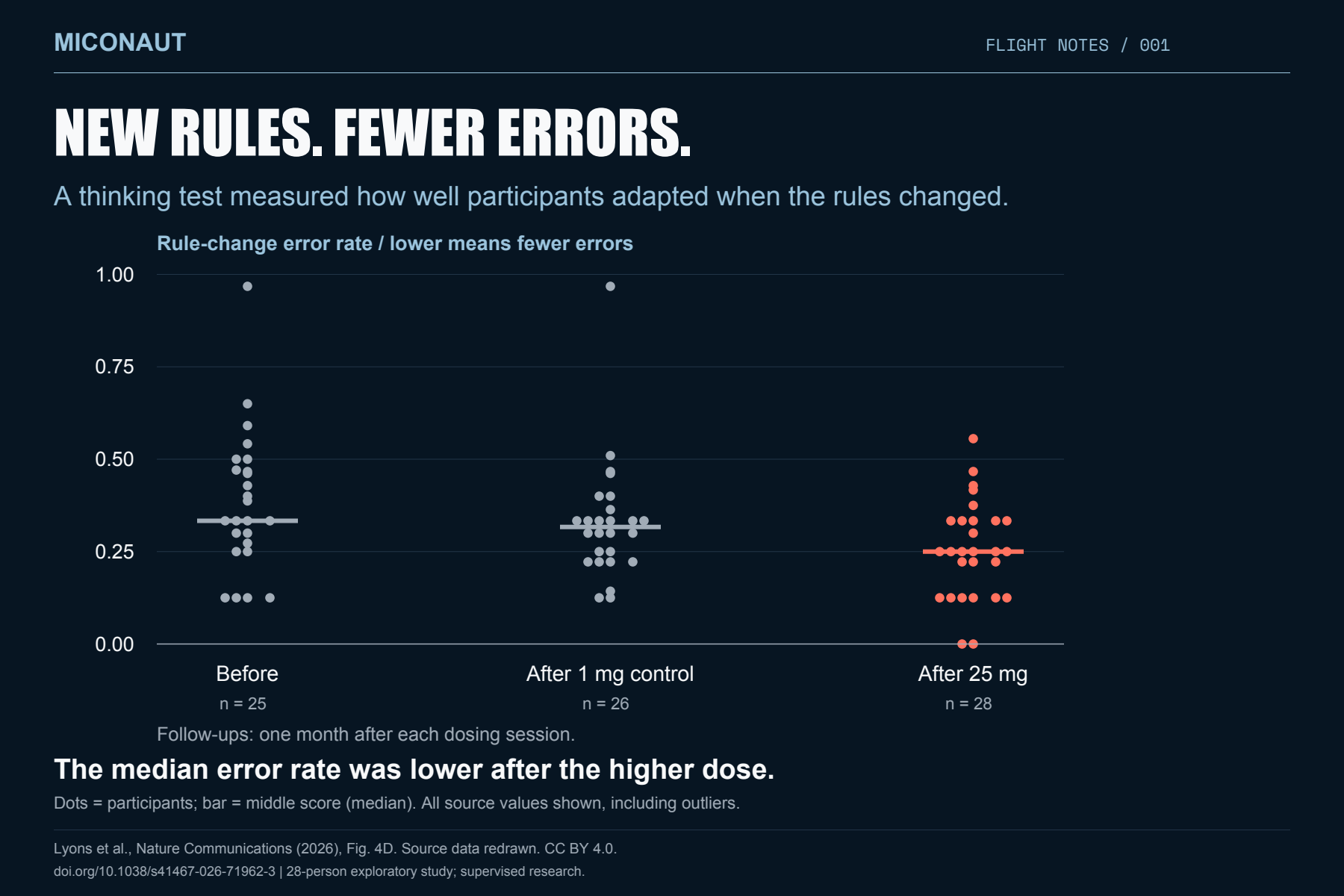
That possibility matters for research into depression, anxiety, and addiction. Understanding how people become less stuck could help explain — and eventually improve—psychedelic treatments. This study involved healthy volunteers, so it did not establish effectiveness for those conditions. UCSF’s explanation of the findings.
THE SCANS LEFT A CLUE.
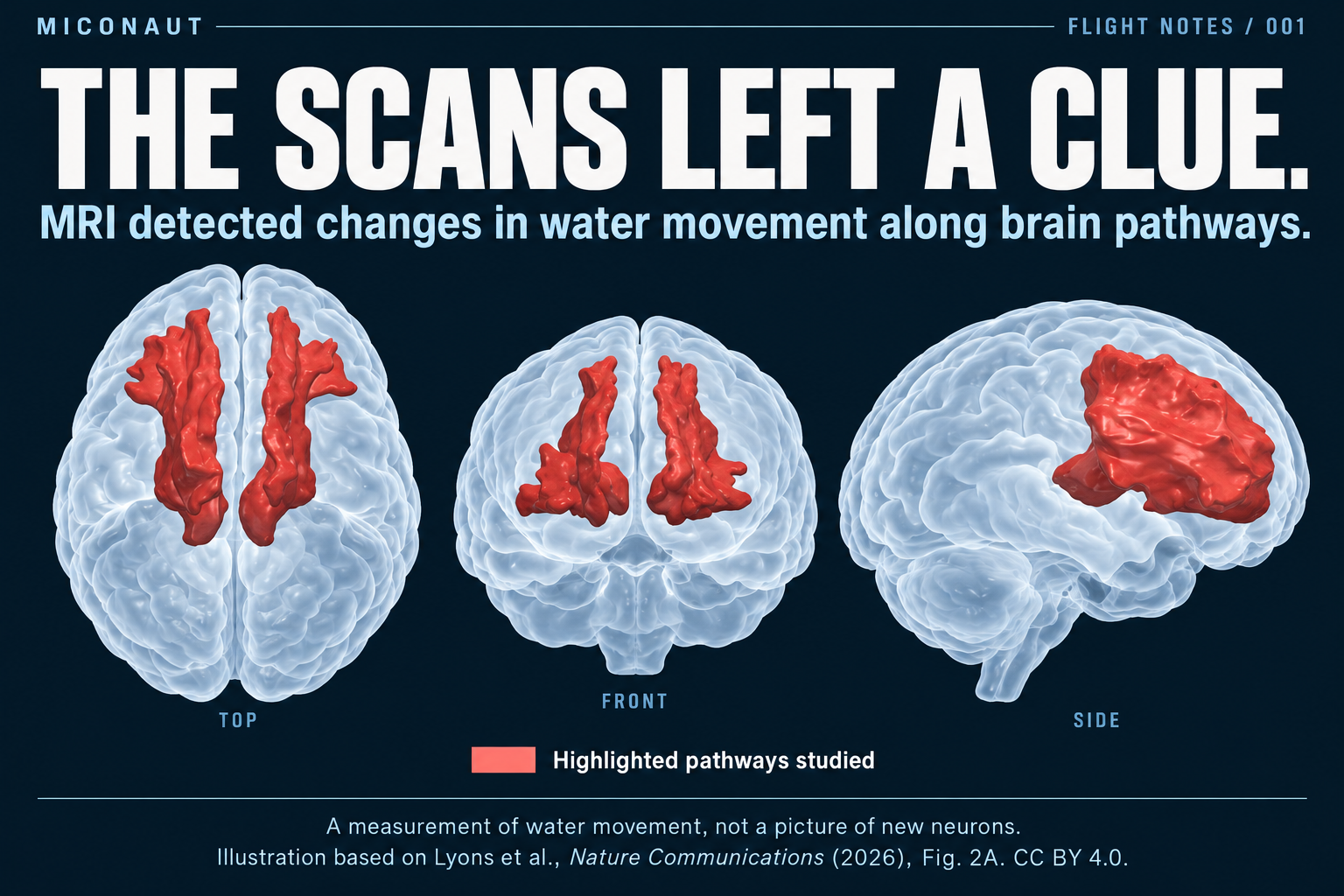
Specialized MRI detected changes in water movement along certain brain pathways a month later.
These could reflect changes in brain microstructure, but they don’t directly show new neurons or prove beneficial “rewiring.” Most lasting functional connectivity measures showed no significant differences against the control. Study results and discussion.
STILL PLENTY TO EXPLORE.
This study gives researchers something worth following: changes in brain activity, possible structural changes, and improvements in psychological measures after a supervised psilocybin experience.
There’s more to understand. Only 28 people took part, everyone received the doses in the same order, and follow-up lasted one month. This was a supervised higher-dose study, not a test of a microdosing routine. Larger studies will need to test whether the findings hold up.
That’s what keeps us curious. Every finding brings another question.
Your mind. A universe to explore.
Keep us on your radar
Follow @miconautlab